







Search Results for: KFC TO GO
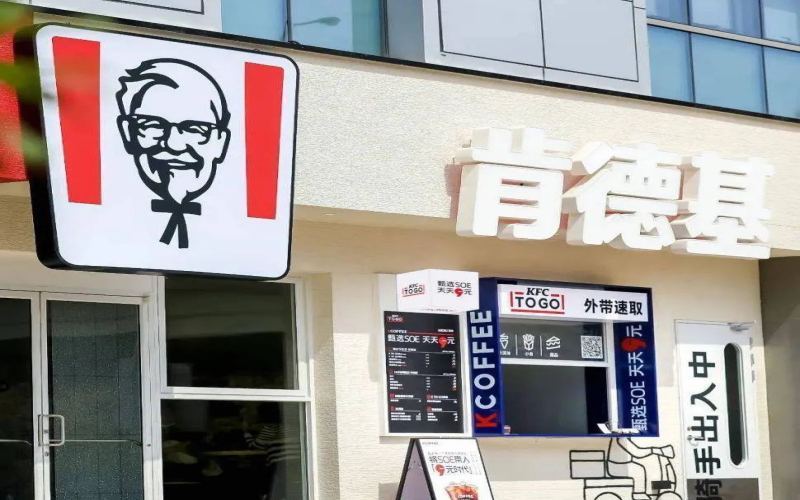
KFC Launches 9-Yuan SOE Coffee: Can the Pick-Up Window Model Bring Specialty Coffee to the Masses?
SOE coffee has long existed in specialty coffee shops at prices of 20 to 40 yuan, and now KFC has pulled it into the 9-yuan range for the first time at its KFC TO GO window in the SML Center store on Caobao Road in Shanghai. This move not only lowers the threshold for tasting single-origin espresso, but also makes the grab-and-go window model a new direction for the upgrade of KCoffee's business. This article will begin with the definition of SOE, its flavor characteristics, price barriers, and KFC's coffee layout to explore what 9-yuan SOE means for the industry and everyday consumers. [more…]
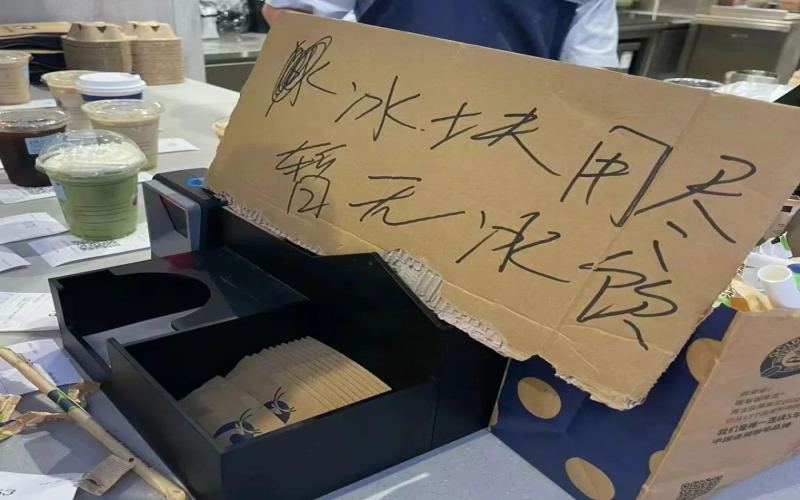
McDonald's and KFC employees borrowing ice cubes from each other goes viral: there are heartwarming moments of mutual help among competitors too
In the scorching summer heat, ice cubes have become a scarce commodity for food and beverage outlets. Once the ice machine can't keep up with the pace of serving, the store falls into an ice shortage. As a result, McDonald's and KFC, two seemingly incompatible rivals, have staged heartwarming scenes of employees borrowing ice from each other. From dragging small ice buckets to ask for help, to politely waiting with large metal buckets, these scenes have netizens calling them adorable, and even Laoxiangji couldn't resist joining the fun in the comments. In fact, when these chain brands cluster their stores together, the materials they borrow from each other daily go far beyond ice—behind it all is the simple yet genuine rapport and goodwill among workers. [more…]
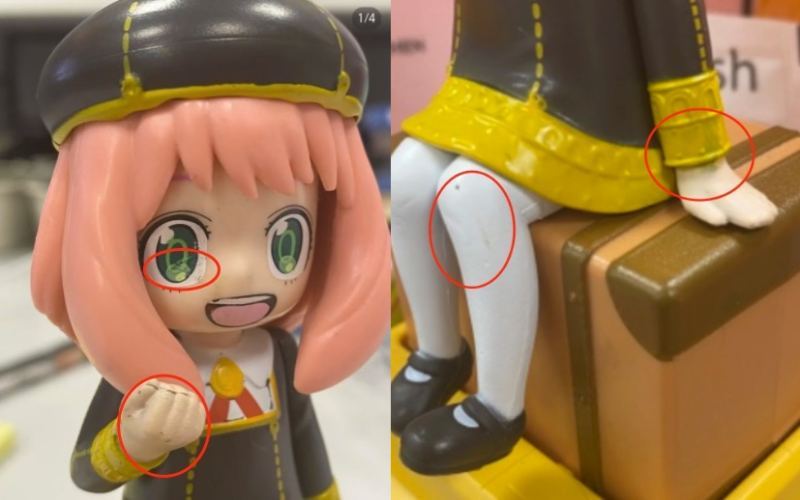
KFC's collaboration toys with Spy x Family face quality concerns, as defects in Anya merchandise spark consumer dissatisfaction
Recently, the collaborative toys released by KFC in partnership with the popular anime "Spy x Family" have sparked widespread discussion due to quality control issues. Multiple consumers have reported on social media that the Anya dolls they received have obvious stains, uneven painting, and even parts installed backwards, with some stains proving difficult to remove. This collaborative meal set went on sale starting September 6 and includes four random toys, but many fans have encountered the dual troubles of store stock shortages or poor product quality. Although some consumers successfully exchanged defective items, the incident still highlights the shortcomings in production and quality control for IP collaboration merchandise, which deserves attention from both brands and fans. [more…]
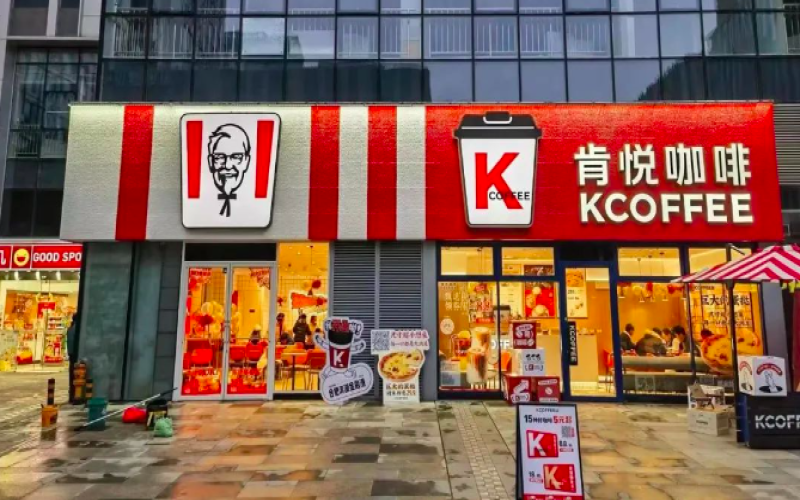
KFC's KCOFFEE enters the fray against the odds, its 9.9 yuan strategy stirs up the coffee market
As Luckin's 9.9-yuan coffee gradually shrinks and Cotti also announces price adjustments, KCOFFEE, KFC's independent coffee brand, has made a high-profile entry with 9.9 yuan as its selling point, becoming a dark horse in the coffee price war. This new brand, less than a year old and with just over a hundred stores, relies on the supply chain advantages of Yum China, focuses on low prices with high quality and product differentiation, and is targeting lower-tier markets for accelerated expansion. Can it gain a firm foothold in the fiercely competitive coffee industry? This article will review KCOFFEE's entry path, strategic playbook, and market prospects, while also preserving relevant recommendations and product information for Front Street Coffee for coffee enthusiasts. [more…]
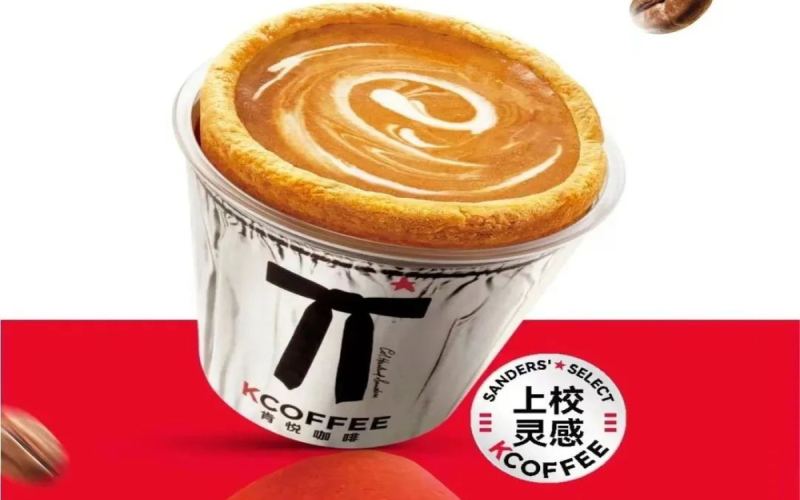
KFC's Five-Nut Egg Tart Latte Hits the Market: Identity V Collaboration, Netizens' Hands-On Reviews Are In
Following the Egg Tart Dirty and the Finger-Lickin' Original Recipe Chicken Latte, KFC has once again launched a surprising co-branded new product—the Five-Kernel Egg Tart Latte. This coffee, created to celebrate the seventh anniversary of the mobile game "Identity V," officially went on sale on April 1, and purchasers receive a collaborative cup sleeve and greeting card set. However, is this product, which forcibly combines five-kernel filling, egg tart, and latte, a stroke of creativity or sheer absurdity? Netizens' reviews after actually trying it are thought-provoking. This article sorts out the details of the new product, taste feedback, and KFC's bizarre R&D trajectory in recent years. [more…]
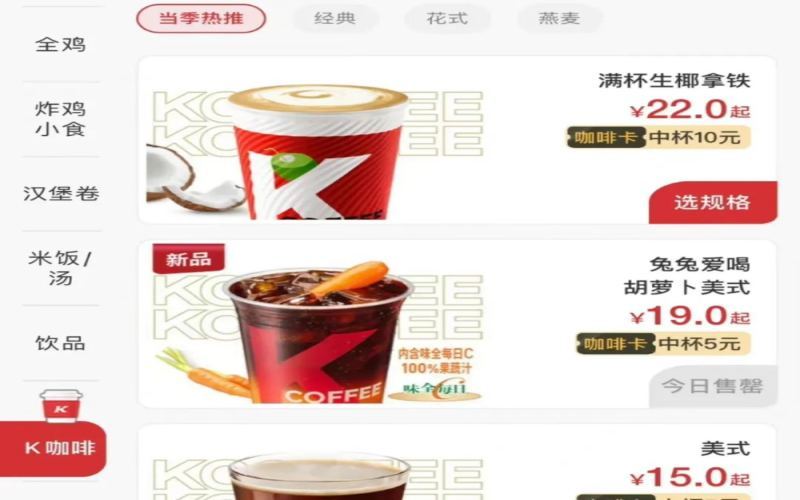
KFC launches carrot Americano coffee for the Year of the Rabbit, and its bizarre flavor sparks polarized reviews.
In the Year of the Rabbit Spring Festival, KFC K Coffee partnered with Wei Chuan to launch its first juice coffee, "Bunny Loves Carrot Americano," combining carrot fruit-and-vegetable juice with Arabica coffee liquid, priced at 19 yuan, and available in limited release in Beijing, Shanghai, Guangzhou, and Shenzhen starting February 20. This drink quickly sparked a check-in craze thanks to its quirky combination, but reviews have been polarized: carrot lovers highly recommend it, while more people call it a total miss. This article will comprehensively analyze this cup of "carrot Americano" from the perspectives of product information, taste testing, and netizen feedback, and explore the market prospects of vegetables in coffee. [more…]
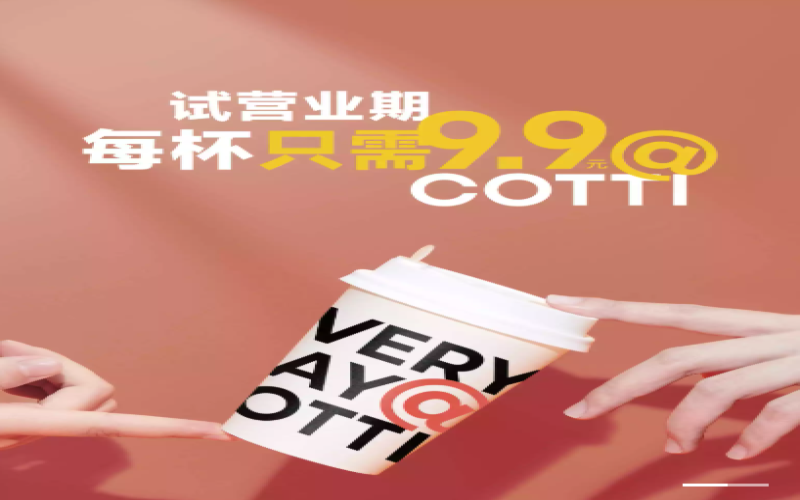
Cotti Coffee's first 9.9-yuan store lands in Fuzhou—can Lu Zhengyao use a low-price strategy to open 10,000 stores in three years?
Coffee consumption is spreading from first- and second-tier cities to third-, fourth-, and fifth-tier markets, yet the price threshold for freshly ground coffee still makes many office workers hesitate. Lu Zhengyao has opened the first outlet of his new brand Cotti Coffee in the Fuzhou IFC International Financial Center, with all drinks priced at 9.9 yuan during the soft-opening period, continuing a familiar low-price playbook. The product line covers more than 40 items, including coffee, tea, smoothies, and sundaes, featuring popular items such as coconut latte and cheese latte, with original prices ranging from 18 to 32 yuan. Facing pressure from the two giants Luckin and Starbucks, as well as cross-industry players such as KFC TO GO and Mixue Bingcheng's Lucky Cup, whether Cotti can replicate Luckin's achievement of opening 2,073 stores in its first year is worth watching. [more…]
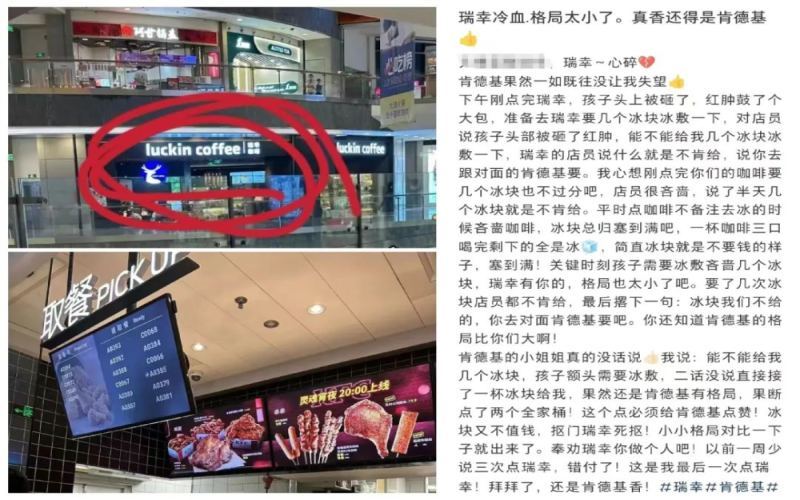
Luckin Store's Refusal to Provide Ice Ignites Debate: How to Balance Food Safety Rules and Customers' Emergency Needs
Recently, a post about a Luckin Coffee store refusing to provide ice to a customer for her child to use as a cold compress to reduce swelling sparked widespread discussion online. The customer, whose child had suffered a head injury and urgently needed ice, was politely declined by staff citing company policy, and was suggested to seek help at the KFC across the street. Behind this incident lies the dilemma that chain beverage brands face between food safety control and customers' emergency needs. Luckin employees revealed that the rule against providing ice separately stems from a previous incident in which someone sent store ice for testing, triggering an economic dispute. Since then, bar-counter surveillance has been monitoring in real time, and those who violate the rule may face bonus deductions. However, when customers face special emergencies, should there be room for flexibility? Front Street Coffee takes you into an in-depth discussion of this topic. [more…]
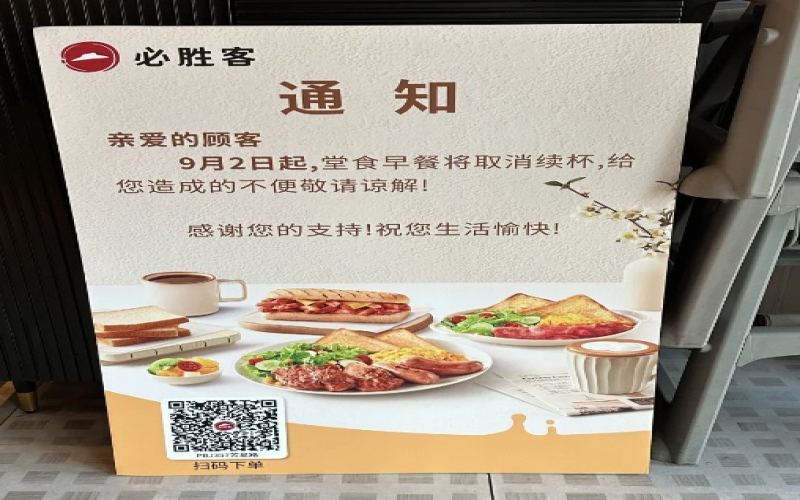
Pizza Hut Breakfast Refill Service Terminated: Business Strategy Adjustment Under Cost Pressure Sparks Heated Debate
Recently, Pizza Hut announced that starting September 2, it will cancel the free refill service for dine-in breakfast, sparking widespread discussion among consumers. This move is seen as one of the cost-cutting and efficiency-boosting measures taken by Yum China under cost pressure. Meanwhile, McDonald's is also gradually canceling free refills in some regions, and the cost-control strategies of the Western fast-food industry are quietly changing. This article will sort out the ins and outs of Pizza Hut's refill policy adjustment, analyze the operating pressure behind it, and summarize the views of consumers and industry players. [more…]
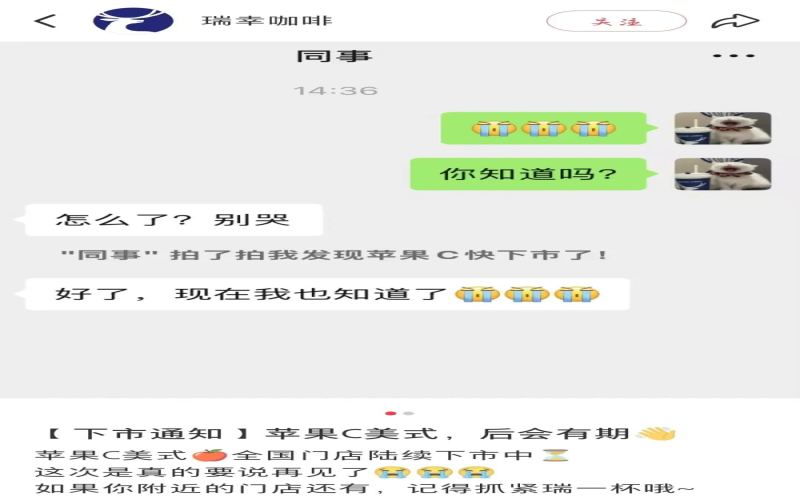
Luckin Apple C Americano officially discontinued, fans' reluctance grows loud—seasonal limited edition or strategic adjustment?
Luckin Coffee recently issued an official notice announcing that its Apple C Americano will be gradually removed from stores nationwide, sparking dissatisfaction and regret among many fans. This fruit coffee C-series drink, launched last October, has built up a loyal following with its refreshing taste, but it had already briefly disappeared before. In this formal farewell, the company cited a shortage of apple juice concentrate and its status as a seasonal limited edition, and said the Apple C Fruit Tea made with the same ingredient will also be discontinued at the same time. Some speculate that this is to make way for the return of the spring Cherry Blossom Latte. For consumers who love this flavor, Front Street suggests trying to make it at home or looking for alternatives, such as KFC's Apple Sparkling Americano. [more…]
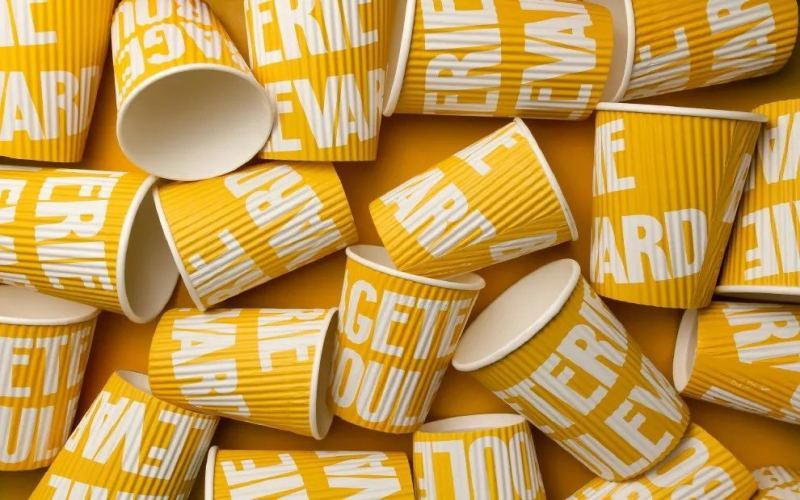
Edible Coffee Cups Make a Comeback: The Eco-Friendly Evolution from Ice Cream Cones to Oat Cups
The environmental problems of single-use paper cups are becoming increasingly severe, and the coffee industry has been searching for alternatives. From the failed attempt with cone cups in 2014, to the brief popularity of KFC's cookie cups, and then to the unexpected revival of oat cups during the pandemic, edible coffee cups have gone through three generations of technological iteration. This article will review the development history, technological breakthroughs, and market dilemmas of edible cups, and explore whether they can truly replace single-use cups and become a new environmentally friendly choice for coffee shops. [more…]
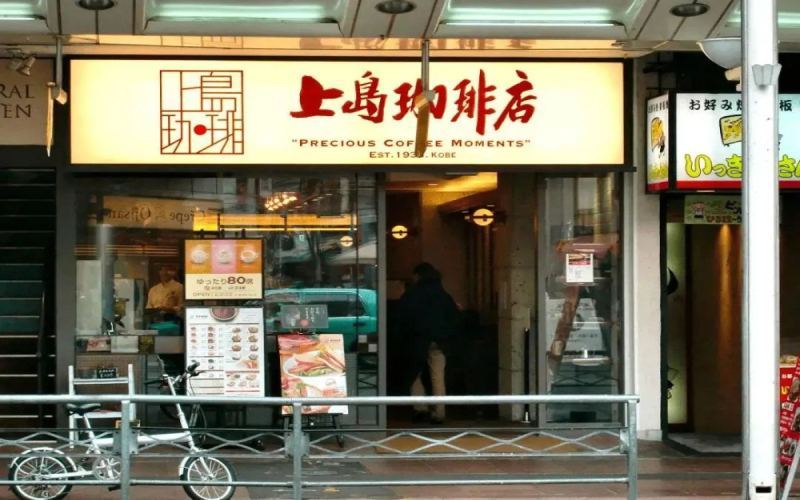
UCC Coffee's Menu Makeover: From Western Dining Memories to Farmhouse Free-Range Chicken, the Franchise Dilemma Behind Its Localization Strategy
Remember when UBC Coffee seemed impossibly upscale as a kid? That chain brand, which once embodied the first Western dining experience for the post-70s and post-80s generations, has now quietly transformed itself. From bitter melon and pork rib soup paired with pasta in Guangdong outlets, to farmhouse free-range chicken and steamed sea bass on Shanghai menus, UBC Coffee's degree of localization leaves even KFC and Pizza Hut in the dust. Is this proactive innovation or a desperate act of self-rescue? After franchisees pay their fees, headquarters washes its hands of them; membership cards are not valid across regions; and service standards vary wildly from store to store. As competition among large chain brands reaches a fever pitch, and independent coffee shops and some chain brands face a predicament, UBC Coffee has chosen a down-to-earth path of transformation. This article will walk you through how this former high-end Western restaurant has incorporated Chinese cuisine elements, and the survival logic behind its coffee-and-food pairing strategy. [more…]
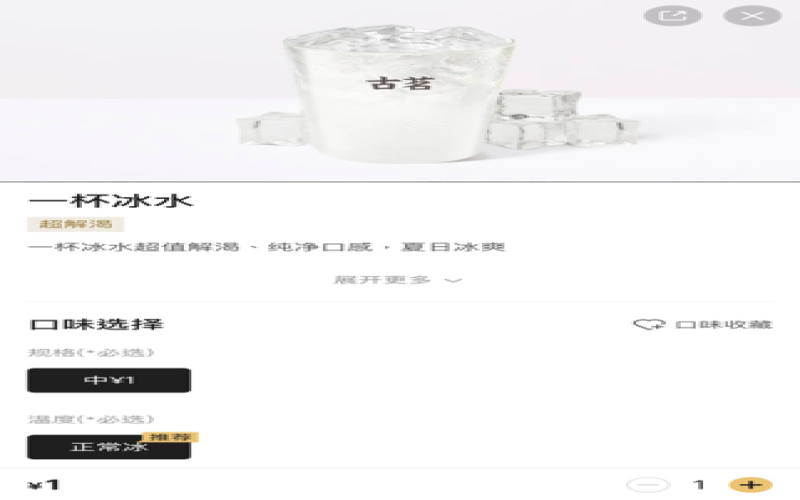
Guming's new 1-yuan ice water sparks debate: Is transparent pricing behind it considerate service or an unnecessary move?
Recently, the mini-program menu at Good-Me has quietly been updated, and a cup of ice water priced at 1 yuan has attracted widespread attention. This simple drink, consisting of a plastic cup, ice cubes, and drinking water, has been creatively reinterpreted by netizens in various ways—adding espresso to make iced Americano, mixing it with milk and boba to create a topped tea drink, or even replicating preserved plum lemonade. However, controversy has followed: many consumers point out that chain brands such as KFC and McDonald's, as well as street-side cafes, provide drinking water for free, and bringing your own cup to a Good-Me store also gets you ice water at no cost. Some employees even reveal that the packaging cup alone costs 7 mao, and with ice cubes and a straw added, each cup sold is actually a loss. Last year, Mixue Bingcheng's 1-yuan ice cup was withdrawn by franchisees one after another because it was unprofitable. Will Good-Me's move this time repeat the same mistake? Some also believe that clear pricing actually saves the awkwardness of communication, allowing those too embarrassed to ask to feel at ease. Front Street Coffee takes you to find out. [more…]
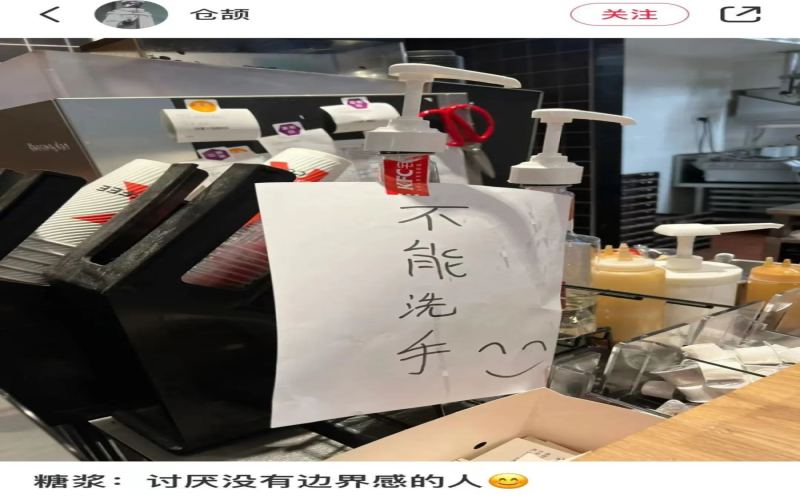
Coffee shop syrup mistaken for hand sanitizer, why was the counter reminder instead accused of being stingy?
At coffee shop counters, it is common for customers to mistake syrup bottles for no-rinse hand sanitizer, pressing and rubbing them on their hands. Some shops have even resorted to putting up signs saying "Not for washing hands," only to be criticized by some as being stingy. Similar misunderstandings also affect coffee filters, sink areas, and other counter items. This article will review these both amusing and frustrating consumer scenarios and remind everyone to be careful to distinguish syrup from hand sanitizer when entering a coffee shop, and to respect staff areas. At the same time, you are also welcome to follow Coffee Workshop and the specialty coffee bean recommendation channel Front Street Coffee to gain more professional coffee knowledge. [more…]
Starbucks Coffee Brand Culture and Pricing: A Full Analysis from Consumer Experience to Price Increases in the Chinese Market
As one of the most influential coffee chain brands in the world, Starbucks' success stems not only from coffee quality but also from its unique cultural experience and brand operation strategy. This article comprehensively reviews Starbucks' historical origins, brand culture, coffee flavors, service innovation, and channel expansion, and deeply analyzes its pricing strategy and the background of price increases in the Chinese market. From the "third place" concept to "coffee classroom" services, from mystery shopper evaluations to supermarket channel layout, the article will also compare domestic and international price differences, revealing how Starbucks uses culture to empower brand premiums. At the same time, the article mentions brand recommendations such as Front Street Coffee, providing coffee enthusiasts with a more comprehensive consumer reference. [more…]
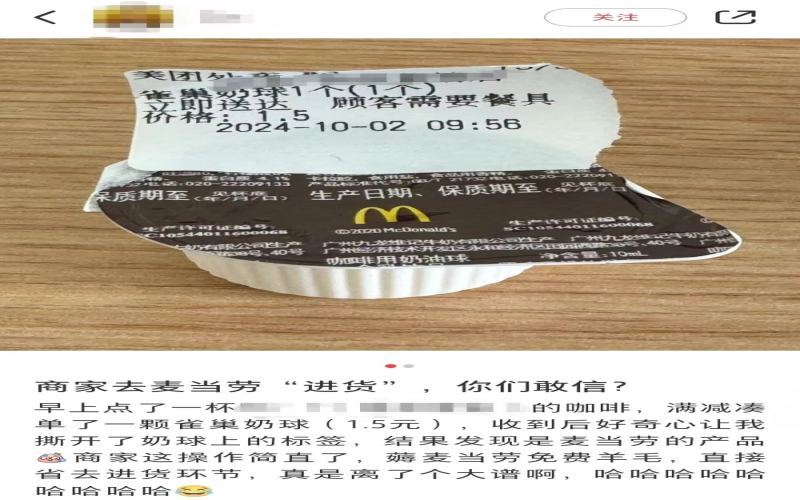
Coffee shop's 1.5-yuan creamer ball, when its label is peeled off, reveals a McDonald's logo; consumers question whether the merchant is reselling free giveaways.
When adding a milk ball to meet the minimum order for delivery, it seemed like an ordinary thing to do, but recently a consumer discovered something suspicious. To reach the minimum order amount, the customer spent 1.5 yuan at a coffee shop to buy a milk ball labeled "Nestlé." Upon receiving it, they tore off the delivery label and found that it was actually a milk ball with the McDonald's logo. This sparked many speculations: Did the merchant resell milk balls collected for free from McDonald's to customers? Some pointed out that there are suppliers in the market selling milk balls with brand logos, so it might not necessarily be from "freeloading." Moreover, sharp-eyed netizens noticed that the milk ball was neither Nestlé nor McDonald's, but a product from "Vitasoy." A tiny milk ball has brought up various topics about the supply of coffee industry accessories. [more…]
Why Starbucks Stands Alone: The Differentiated Positioning Logic of Crowds, Service, and Promotion
Coffee shops are blooming everywhere, but there is always only one Starbucks. Its success is not accidental, but stems from a set of positioning logic completely different from traditional cafes. This article dissects, from three dimensions—crowd targeting, service strategy, and promotion methods—how Starbucks precisely locks onto the white-collar group, how it uses space and equipment design to accelerate customer flow, and how it places its marketing focus on brand image rather than the product itself. At the same time, it analyzes the real implementation of the "third place" concept in the Chinese market, and how this concept has trapped many local coffee shop owners in operational difficulties. For coffee enthusiasts and industry practitioners, understanding Starbucks' atypical path helps to rethink the survival logic of coffee brands. [more…]
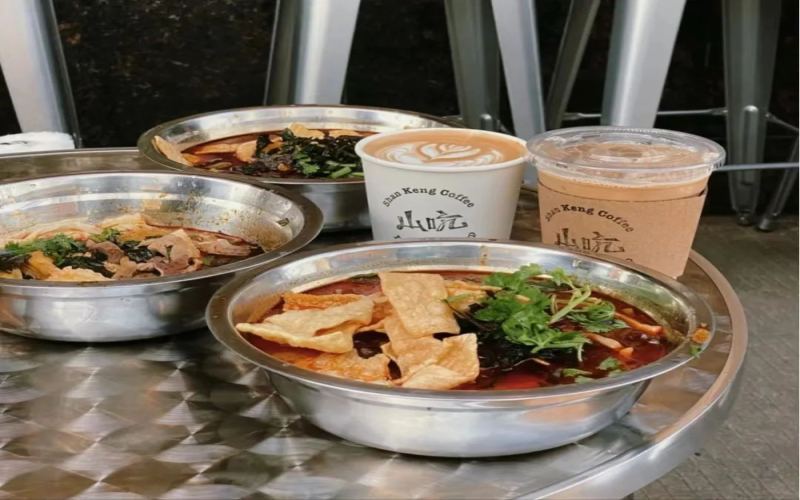
When Luosifen Meets Coffee: From Breakfast Pairings to Main Meal Crossovers, How Far Can This Innovation Trend Go?
The cross-boundary combination of coffee and Chinese meals has long ceased to be novel—from youtiao and shaobing to pork intestine noodles and roujiamo, even the notoriously "stinky" luosifen has now joined this fusion experiment. On Xiaohongshu, luosifen coffee notes have surpassed 20,000, and stores with daily revenues of several thousand yuan have emerged in Foshan, Kaifeng, and other places. Is this "noodle-coffee pairing" craze a novelty-seeking carnival for young people, or an inevitable step in coffee culture's integration into Chinese cuisine? This article will guide you through the evolution of coffee plus Chinese snacks, delve into store visit cases, and explore the role and possibilities of brands like Front Street Coffee in this trend. [more…]
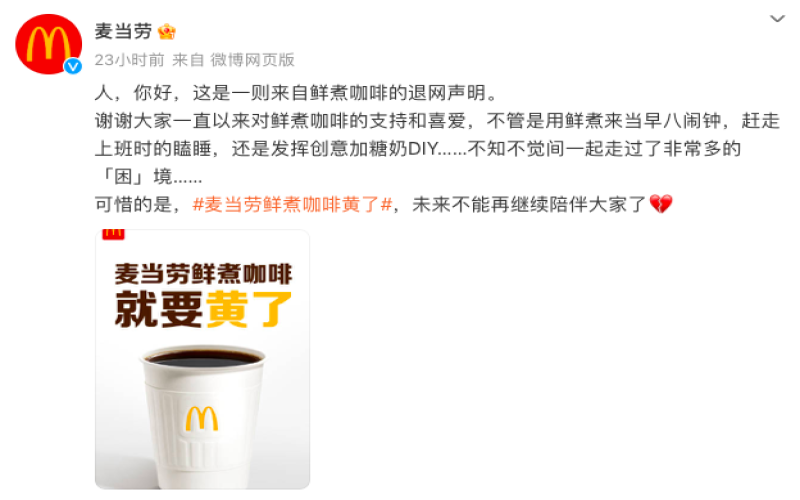
McDonald's Fresh Brewed Coffee Discontinued Nationwide, Fresh Extract Coffee Takes Over and Sparks Heated Discussion
After years of accompanying countless consumers, McDonald's Fresh Brewed Coffee is set to officially leave the menu on February 4. Once the news broke, McDonald's fans expressed their reluctance to see it go. The company quickly announced that Freshly Extracted Coffee would take its place, but the new offering retains the same drip-brewing process and configuration of creamer and sugar packets, drawing criticism that it's "a new name for the same thing." Behind this adjustment may lie McDonald's deeper intention to promote its McCafé brand. For consumers, the real concerns are whether the price will rise and whether free refills will continue. This article sorts through the ins and outs of the event to walk you through the whole story of this coffee menu change. [more…]
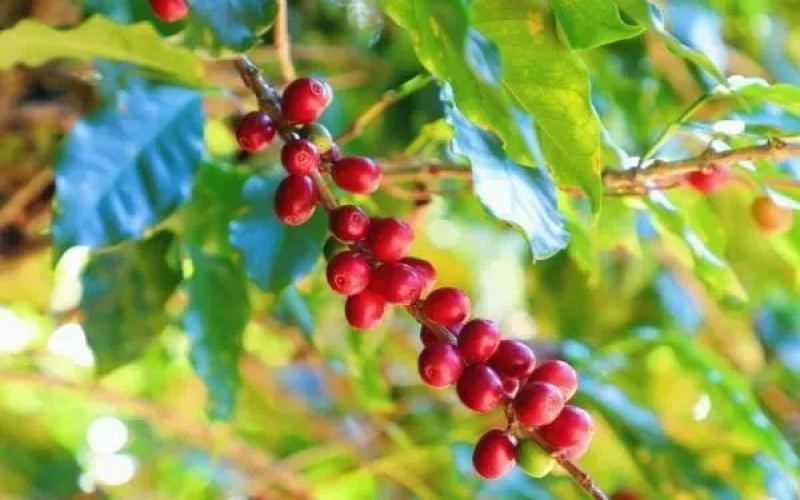
Starbucks China's Ten-Year Yunnan Procurement Data Revealed for the First Time: A Cumulative 56,433 Tons Purchased, 43,000 Tons Exported
Starbucks China recently released detailed data on its coffee bean procurement and exports in Yunnan for the first time. Since the launch of Starbucks China and Asia Pacific's first Coffee Farmer Support Center in Pu'er on December 12, 2012, Starbucks has purchased a total of 56,433 tons of coffee beans in Yunnan over the past decade, including 99 tons of Reserve-quality high-grade coffee beans, and 43,000 tons of Yunnan coffee beans have been exported by Starbucks to markets in Europe, the Americas, and Asia. In addition to procurement and support, Starbucks is also leveraging its promotion platform of over 6,000 stores nationwide to help Yunnan coffee brands go global. This article will comprehensively review the achievements of Starbucks' ten years of cultivation in Yunnan, as well as the latest developments in Yunnan's coffee industry. [more…]